Friday, May 25, 2012

A La Bamba


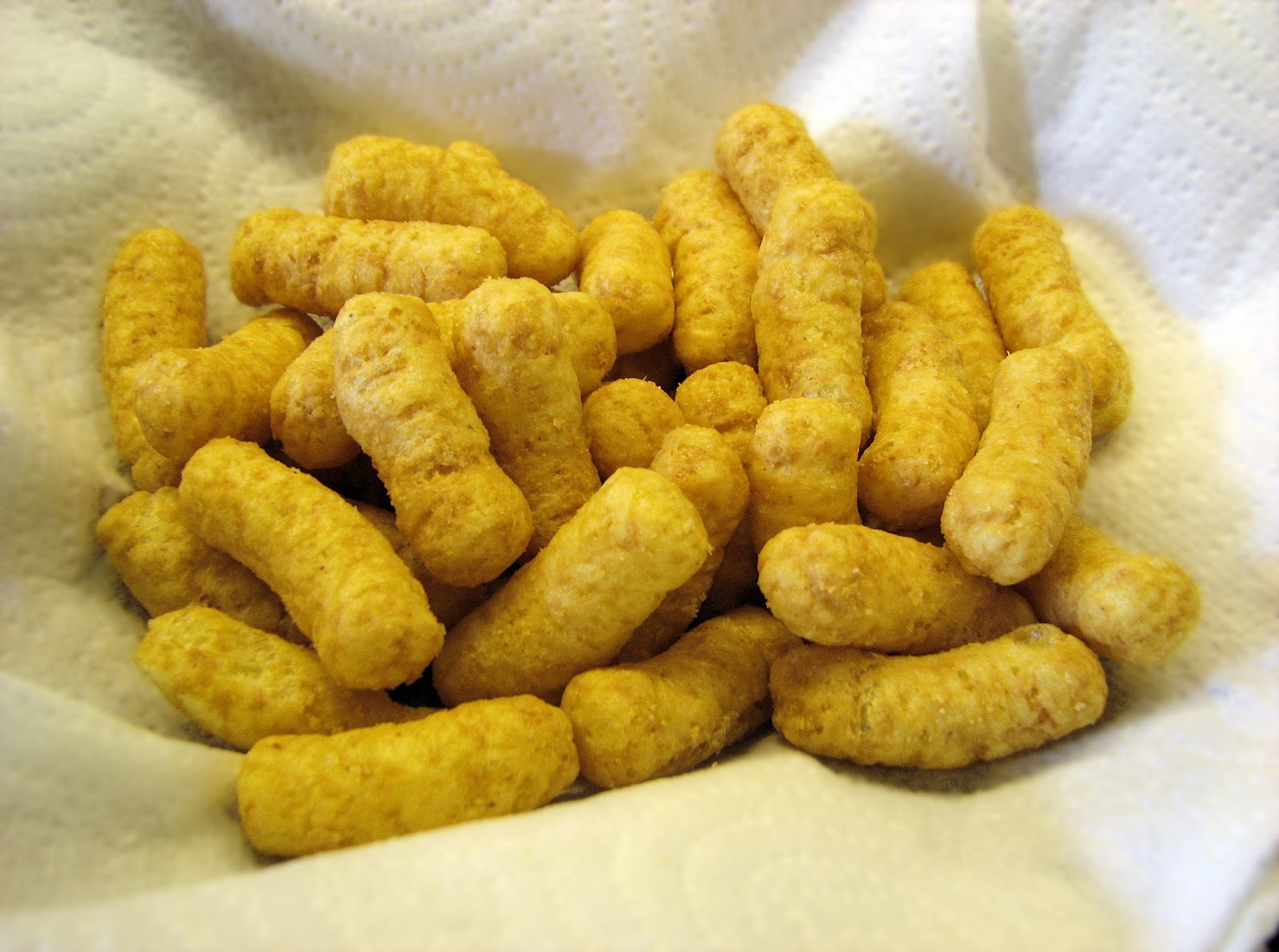
Bamba snack has been around in Israel since the 60’s. You’ll spot it’s recognizable packaging in any supermarket or makolet (milk bar/convenience store) around town. For those of you that are unfamiliar with the notorious “Bamba Snack” – it is essentially peanut-butter flavoured puffed corn. It claims to be free from any cholesterol, preservatives, food colouring and enriched with several vitamins. Sound healthy? Lets see what this peanut-flavoured snack is really all about…


A little bit of history…
Despite its humble appearance (refer to pictorial below), Bamba snack makes up 25% of the Israeli snack market. It was first manufactured by the Osem corporation in 1964 as a cheese flavoured snack, and moved over to a peanut butter snack 2 years later. Other manufacturing companies have tried to come up with similar products (e.g. “Shush” and “Parpar”), but none have reached the mouths of as many children and adults alike, as Bamba. Other more recent flavours that have come out include, strawberry (useful for anyone allergic to peanuts), chalva filled and nougat filled. If anyone is interested there is a Bamba house in Holon, where you can learn anything and everything about the snack (tours are free).

A spot of nutrition...
Ok, granted – as advertised, it is free from preservatives, food colouring and cholesterol. But so is a lot of other snacks, take natural peanuts for example. Being that Bamba is only 49% peanuts, you’re better off having them plain.
Added vitamins? Fair enough, but we shouldn’t be confusing foods that naturally contain vitamins compared to added vitamins. Vitamins and minerals are meant to be eaten as part of a whole food, along with all the other nutrients that the food contains. If we want to encourage eating a more nutritious diet, we should be encouraging foods that are naturally high in nutrients, rather than a peanut puff with some added nutrition. The little Bamba baby on the packaging specifically targets the product to children – we shouldn’t be confusing the little ones of our generation with mixed nutrition messages.
This comes along with the fact that the product is still high in fat and energy – in 100g of Bamba (a small bag is 25g), there are 544 calories (or 2277 kJ), which is about ¼ of the amount of calories an adult should have in a day, and 35g of fat.  

On the plus side, compared to other packaged snacks – like potato chips and Bissli, I would probably place Bamba a little higher on the scale. The other bonus that proponents of the product like to argue, is that Israeli children appear to have less peanut allergies because of they are more exposed to peanuts (i.e. Bamba) at a younger age. This is according to the opinion, that the early introduction of peanuts to infants can prevent the development of peanut allergies because the body is able to develop a tolerance to the peanut protein. One specific study found that Jewish children in the UK were 10 times as likely to develop a peanut allergy compared to Jewish children in Israel.


Friday, May 11, 2012

BBQ season


Ensuing my Return to Zion I was greeted by a country filled with a cacophony of barbeques:


‘tis the season to be covered in smoke. And by smoke, I mean barbeques. My arrival to Israel a few weeks ago seems to have coincided with a nationwide BBQ infatuation, also known in this country as “Mangal מנגלor “Al Ha’aish על האש. It all began with Yom Haatzamaut (Independence Day), where parks and gardens were filled with family and friends enjoying burgers (boo-gerrr) and hotdogs. Moving onto Lag Baomer, which took place just a few days ago, the night sky was filled with so much smoke from  the multitude of bonfires, you could have easily thought the country was at war. When - in fact, the night was just another excuse to cook food over a fire.
 
And now, with summer well and truly here (maybe not technically, but certainly weather-wise) I do not doubt the constant aroma of grilled meat and other assorted goods wafting through the streets on a balmy summers night.

On that note, we have arrived at our usual question –
Are barbeques nutritionally good or notoriously unhealthy?
And as always:
There are two sides of the coin, or should I say, two sides of the burger bun? (don’t worry, I'll avoid including anymore corny-ness in this blog entry)

To start off on a positive note barbeques definitely have the potential to be a really healthy meal. The method of cooking on a barbeque doesn’t require much added oil, and if you go for meats like chicken breast, lean pieces of steak, fresh fish and homemade burgers you will be eating minimal amounts of fat. Add in vegetable skewers, fresh salads, corn on the cob, baked sweet potato and fruit salad for dessert, you'll become the perfect picture of health. To top it off, eating a meal outside in the sunshine with good company is also great for your mental health. How’s this for a relaxed atmosphere? Picture a picnic blanket filled with colourful food and happy people laughing and eating together. Perhaps a casual game of Frisbee/footy/madkot (depending what country you are from) going on in the background – what could be better?

Unfortunately, it’s not all fun and games. There are a few health risks that come along with BBQs. Cooking meat at extremely high temperatures won’t only ruin the taste and texture of the meat, it can also produce chemicals that have cancer-causing properties. To get a little technical, when the meat is cooked at high temperatures, the amino acids (proteins in the meat) react with something called creatine. This reaction forms a dodgy substance called heterocyclic amines (HCAs) that have been thought to increase cancer risk, particularly stomach and colon cancer. The longer the meat is cooked for, means more of these heterocylic amines are produced. The smoke produced from the burning coals also exposes the meat to cancer-causing chemicals.

Then there is the potential of undercooking the chicken on the barbie, which can result in uncomfortable situations. Ever had a really bad stomach ache after a BBQ, with the irrefutable knowledge that the meat was cooked wayyy too quickly? It is also really common to use cheap, unhealthy cuts of meat such as sausages, pre prepared burgers, chicken wings and lamb chops, paired with bread and a couple of beers or cans of coke (no salads included, except for maybe a mayonnaise-laden coleslaw). Top that off with sitting out in the sun for hours, exposing your skin to UV rays and cancer risk – remind me of the original scenario I painted?

So maybe that was two extreme (or not so extreme) examples of BBQs. The point is, they have the potential to go either way, you might just have to put in a little more effort to make them healthier (as usual).

Also, here are some ways to reduce the formation of HCAs:


  • Clean the grill
  • Trim excess fats from foods
  • Avoid flare ups from the grill, as they increase HCA formation
  • Try to avoid overcooking the food, the black, charred bits are the largest source of HCAs
  • Use marinades that contain olive oil and lemon juice, as well as fresh herbs like oregano, sage, thyme and rosemary – as these can also reduce the formation of HCAs
So here is to an upcoming summer of beaches, barbeques and breakthrough moments. And for everyone else in the Southern Hemisphere - apologies, you'll have to wait 6 months..


I’m not sure how this song quite fits into the theme but just roll with it…


Tuesday, April 10, 2012

Pregnant with a Matzah baby? Learn how to stay regular during this disastrous week:

While the week of Pesach is a time of irregularity, there is one thing that remains regular. People complaining about their bowels and the like. The phrase "Let my people go" takes on a whole new meaning. Somehow the gastrointestinal system does not appreciate the change in diet and responds in a negative manner. Fear not. Here are some ways to combat this and keep those bowels happy.

#1 Feast on Fibre
Dietary fibre is the stuff found in foods like wholegrain bread, cereal, oats, brown rice, lentils, legumes and wholemeal pasta. Amongst its many benefits it helps to prevent constipation and keeps your lower intestine in tip top shape. Unfortunately, a large proportion of the foods that are high in fibre are banned during Pesach - making it a little more difficult then usual to fit it. So what are the high fibre foods that you can eat during Pesach? Fresh fruit and vegetables, cooked fruit and vegetables, dried fruit and vegetables and nuts. But not fruit juice. Try to keep the skin on the fruit and vegetables as that contains majority of the fibre. As you can see – lots of choice!

There is also wholemeal matzah which is a great option (seems to have a lot more flavour than the plain matzah) and if you’re really struggling, marry a Sephardi and then you’ll be able to eat brown rice, lentils, corn and all the good stuff.

#2 Keep your body moving:
Exercise is your digestive systems best friend. It helps by moving the food through the large intestine and can assist in the contraction of your intestinal muscles. After sitting through one or two (depending on which country you live in) Seders, go for a walk, boogy to some Pesach music, go on a Matzah hike – or  do any form of physical activity that you enjoy really.

#3 Liquid fun:
Water, water, water. Drink it. Lots of it. And by lots of it, try to aim for 8 cups or 2 litres a day. If you really hate water, any fluid is ok – including tea, coffee, milk and juice. But try to stick with water. Liquid adds fluid to the colon and bulk to stools, making it all easier to pass through. Try and avoid drinking too much caffeine and alcohol as these can dehydrate you.

#4 Natural laxatives:
Both pears and prunes are high in fibre, however pear juice and prune juice have also been shown to improve constipation due to some natural laxatives they contain. Pears contain something called pectin, which has a mild laxative effect while prune juice contains a natural sugar called sorbitol. Similar to fibre, it helps to soak up any water it comes across. It also contains a compound called dihydroxyphenyl isatin*which acts as a laxative by stimulating the contraction of the intestinal wall and increasing fluid secretion.  

* note – scientific jargon

#5 Medicinal action:
Real laxatives, in the tablet form. If you are still suffering after trying all these tactics, you may need to go to a more drastic form. Laxatives can help with constipation but remember to read the instructions carefully and watch out for the insides of your stomach starting to feel like a punching bag (based on anecdotal evidence).

And finally – it’s only one week. Before you know it, your stomach will be celebrating its own freedom.


Saturday, March 24, 2012

Meat and milk – What’s the problem?

Judaism seems to disagree with it. Keeping meat (fleishig) and milk (milchig) seperate is one of the guiding principles in what we like to call as “Kashrut”, Jewish dietary laws. That’s right. It means we can’t eat a bunch of regular people foods like Chicken Parmesan (or parma for the aussies), cheese burgers, lasagna or pepperoni pizza. Even sipping on a cappuccino while eating a chicken sandwich or spreading garlic butter on a piece of steak is a no-no. Meat and milk are kept separate, to the extent that in many Orthodox Jewish homes you will find two sets of plates, cutlery, cups, serving dishes and sometimes even two ovens, two stoves and two sinks. To make things even more complicated, some families have a third set of dishes for foods that are neither meat or milk, otherwise known as “pareve” – neutral (e.g fruit and vegetables).

There are also differences among the Jewish people as to how long one waits between eating a dairy product and a meat product. Some wait 1 hour, 3 hours, 5 hours or even 6 hours – but this will also depending on whether or not the person is eating dairy after meat or meat after dairy. Sounds complicated? Only just a little bit. Welcome to the Kosher world.


And all this originates from a verse in the Book of Exodus (Shemot) which forbids “boiling a kid in its mothers milk”. Don’t freak out. This is not referring to cooking children (although that should also be forbidden), but rather baby goats. From this simple one-liner the dietary laws around meat and milk developed into three main principles.

1)    No cooking meat and milk
2)    No eating meat and milk
3)    Not even getting any benefit from a cooked mixture of meat and milk.

That last one sounds a little strange, it means you would be unable to own a restaurant that served cheeseburgers even if you didn’t cook or eat them.
Just to confirm – meat refers only to meat and poultry from kosher animals, not fish (although some groups of Jews avoid eating fish with cheese for a different reason).


One of the motivations behind this principal is the ethical aspect it represents. Using the milk of an animal to cook its babies is somewhat inhumane and pretty disgusting if you think about it.

And here comes the nutrition aspect:
People are always trying to come up with reasons as to why we keep Kosher. In ancient times, it may have been more obvious that keeping kosher had a positive impact on health, but in modern times it’s hard to support this notion. On the flip side, there are more and more people that choose to buy Kosher products for the supposed health benefits, so go figure...

When it comes to the topic of mixing meat and milk together there is some evidence that claims eating the two together interferes with digestion. The other benefit I guess, is that any restriction on your diet usually (but not always) results in eating less. Meat and dairy are both quite high in energy/calories so avoiding one of the two in a meal should make the dish lower in calories, you would hope.  It also happens to be quite convenient for any vegetarians – if a dish contains any sort of dairy, you can be certain it is meat free. The same goes for any lactards – a dish with meat in it, means they can enjoy it without any worries. Despite these possible benefits, and any other suggested reasons for this Mitzvah – the simple explanation is that we keep kosher because G-d told us to, even if we don’t fully understand why. Not an uncommon theme in Judaism.  


Growing up in an Orthodox home, I was never tempted to eat dairy and meat together. It wasn’t something that appealed to me, probably because my taste buds had never encountered this mixture before. It did however, become particularly challenging for me, when as part of my degree I did a unit on practical cooking skills. First thing I had to make? A caesor salad with bacon and cheese (which apparently wasn’t a problem since bacon isn’t considered “meat” in the Bible). Next thing I had to cook? Chicken stuffed with pesto. Even though I wasn’t eating the food, I had to use substitutes in many situations. The problem was, I never knew which version was better.

So that brings me to my next point. I’ve come up with a few of the classic meat-milk combos that seem to be so popular around the world, and suggested an alternative for the Kosher population that are just as good, or maybe…even better. This is without using soy products and fake meat or cheese.

Cheese burger – the classic meat-milk mixture. Simple alternative – swap the slice of cheese for a grilled portabello mushroom. Healthier and more flavoursome (speaking from a biased point of view). Unfortunately (or fortunately in my opinion) the Kosher McDonalds in Ben Gurion Airport, in Tel Aviv has closed down. Sorry guys.

Lasagna – funnily enough, growing up I only ever had vegetarian lasagna with cheese. The concept of having a “meat-lasagna” never occurred to me. Alas, google a lasagna recipe and the traditional recipe requires minced meat, mozzarella cheese and a white cheese sauce. There is always the option of going veggie, or using weird soy protein meat substitute (which surprisingly tastes great). But moving away from fake food, you can simply make a “white sauce” with margarine, corn starch (to thicken it), coconut milk, fresh garlic, salt, white wine, and any optional minced vegetables for extra flavour (e..g mushrooms, onions, celery). Granted, it is a little more complicated – but definitely worth it!

Pepperoni Pizza – something I’ve always wanted to try but never have, is cracking a whole egg onto a pizza and baking it. Alternatively fry an egg, cut it up and place it around the pizza – let me know how it works out.

Spaghetti bolognaise (spag bol) – Instead of serving with parmesan cheese, sprinkle basil and parsley on top.  Ok, it may be different in texture, colour and flavour but still sprinkle-worthy.

Chicken parmesan – In majority of these dishes, I’ve suggested dairy replacements. In this case its easy – why eat chicken parmesan if you could have eggplant parmesan? And if you can eat eggplant parmesan, why not zucchini parmesan, or carrot parmesan, or pumpkin parmesan? Ugh...that does sound kind of gross. Maybe just put a dollop of chummus on top of the chicken, make Zohan happy.

Cream of chicken soup (is there such thing?) – It might be an Australian product, but adding a can of creamed corn to chicken soup is delicious. Another option, that may sound strange but happens to taste great – is adding rolled oats to chicken soup. It makes the soup a lot more creamier and thicker.

I hope that this has provided some culinary inspiration, rather than a sense of hopelessness at the limitations that come along with Kashrut.  

Sunday, February 12, 2012

Gefilte Fish: ge·fil·te fish (g-flt) n. Finely chopped fish, usually whitefish, pike, or carp, mixed with crumbs, eggs, and seasonings, cooked in a broth in the form of balls or oval-shaped cakes, and usually served chilled.

A Jewish legendary food. Somehow it hasn't crept into this blog until now – I guess better late then never? Also, I should point out that this blog has been in operation for a year already! Yay!

So. Gefilte Fish. Kind of like meatloaf, but with fish. Let me paint you a picture. Think of a slightly whitish-greyish oval shaped fish-sponge with a boiled sliced carrot on the top for decoration. It makes no apologies for being one of the most ugliest foods. Commonly consumed with a dollop of chrein (horseradish – blog article link), it is enjoyed by Ashkenazi Jews all over the world on a weekly basis, although as a child I was always terrified of it. One of my friends accidently served gefilte fish in her chicken soup, thinking it was matzo balls – needless to say, it was not a pleasant experience.


A little bit of history…                                                                                                          
The translation of the Yiddish word gefilte is “stuffed”. Back in the Talmudic period,  our sagely Rabbis encouraged eating fish at the Sabbath meal because of its aphrodisiac effect. They believed the tantalizing aroma of the fish at the Sabbath table would support couples in fulfilling the command to be “fruitful and multiply”, specifically promoted on Friday night. On a completely different note, the Hebrew word for fish, dag, numerically corresponds to the value of seven. This reflects the commandment of working for 6 days during the week, and resting on the 7th. We picked up this custom, and Jews in Eastern Europe used to make a mixture of chopped fish, stuff it back into the skin of a fish and boil it. Hence the name for stuffed fish. They weren’t too creative with the names of their dishes back then.

As was common with dishes in the old times, anything that stretched the limited resources that were available was a plus. Gefilte fish was a cheap form of fish, and at the same time, it prevented the transgression of removing bones on the Sabbath (which falls under the category of “Borer”, separating the bad from the good). With time, Jewish families stopped stuffing fish altogether, and simply formed the fish mixture into balls for boiling or steaming. Less work, I guess. Onions were added to help with preservation, since refrigerators weren’t too popular at the time. Different European countries adopted the different flavours for the fish. While Poland enjoyed a sweet variety of gefilte fish, Lithuanians preferred horseradish and pepper.

Now you can buy prepared frozen logs of gefilte fish, cans of gefilte fish, or just pop into your local deli for a slice.

Fun Fact: New Jersey-based Manischewitz packs 2 million pounds of fish annually for its several varieties of gefilte fish!

A Spot of Nutrition…
The basic ingredients in gefilte fish include ground fish (usually whitefish, carp, mullet or pike), onions, carrot, salt, sugar, oil, eggs, matzo meal and spices. For quite some time now, fish has been put up on a pedestal as one of the most healthy foods out there – mainly because of its high omega-3 content. Omega-3 is an essential (i.e. our body can’t make it on its own but needs to get it from food) fatty acid, found in fish and plant oils. With it, comes a plethora of health benefits such as reducing the risk of heart disease, stroke, cancer, hypertension and alleviating symptoms of joint pain, depression and ADHD.

Unfortunately, it is mainly the oily fish like tuna, salmon, mackerel and herring (a positive for the popular smoked herring at a Kiddush) that are rich in omega-3 fatty acids, absent in the traditional gefilte fish (although there is a variation that contains salmon).

Do not fret, white fish is not too shabby either.

Fish build a significant amount of muscle due to their active swimming life, making them low in fat. White fish are also rich in Vitamin B3 and B6, awesome for promoting healthy skin and eliminating toxins. They have a fair amount of iron, phosphorus, selenium and iodine (good for the immune system and function of the thyroid).
Finally, white fish contain less toxins than oily fish. Because our rivers are polluted with chemicals and toxins from industrial plants and factories, fish end up feeding on polluted plants. A lot of the chemicals are fat/oil-soluble, which means oily fish have higher traces of toxins compared to white 
fish (which only contain oil in their livers).

On the down side, canned gefilte fish is high in salt. Maybe the carrot on the top makes up for it? 

Monday, January 23, 2012

Australia Day

 A tribute to Australian Cuisine. 
*Spoilers alert: There is not an ounce of Jewish-ness to this blog post.

This week bears significance for Aussies. The 26th of Jan is Ostraya (Australia) day. Not unlike any other Australian public holiday, we celebrate with fireworks, beers (pronounced beeahs) and barbeques. What is the reason for such celebrations you may ask? It is the official national day for Australians, commemorating the arrival of the Captain Cook and his Merry Men – the First Fleet from Great Britain to the Land Down Under back in 1788 (a very young country we are). We celebrate all things Australian, and like every other culture – food just happens to be a part of this.

Lets try an experiment: I say Australian cuisine – you think:
Meat pie?
Vegemite?
Weetbix?
Shrimp on the barbie?
Beer?
While it all sounds great, it isn’t exactly sophisticated or, “cuisine” like. More like a conglomeration of random foods that happen to be enjoyed by Aussies. So this brings me to my next point, what is Australian “cuisine”, and how did it develop? Sorry, not much nutrition included here…

It all started with the Indigenous Australians, where bush tucker was their primary source of nourishment. Animals that were hunted included kangaroos, wallabies and emus, as well as snakes, lizards, witchetty grubs and moths. For some strange reason this cuisine hasn't carried through till today - although it isn’t uncommon to find kangaroo and crocodile sausages sold in local markets and delis. If anyone knows of a Kosher version, please let me know.

Then the Brits came along and took over the Island of Oz. This brought about a whole new selection of food types. Salted meats, roast beef, lamb chops, damper (aussie bread), tea, butter, potatoes in any shape and form, beer and plum pudding. Food was pretty bland and tasteless.

But our cuisine didn’t culminate at the Aboriginals or the British. Instead, it exploded through the wave of immigration after the second World War. Primarily, those from China, Greece, Italy, Malaysia, Thailand and Vietnam. Europeans brought us espresso coffee – which has become the post popular beverage ordered in restaurants and cafes around Oz, something I really miss in Israel. Pasta is another dish that was brought to us by the Italians, as well as spag bol (spaghetti bolognaise) and souvlaki, a Greek specialty.  Thai, Vietnamese and Chinese restaurants have become popular venues for locals to eat at, while ingredients such as lemon grass, cardamom and Asian greens are readily available all over.  

Now Australia offers a diverse range of eateries and ingredients. All this aside, there are a few iconic Australian foods that remain prominent in our culture.  Here are some that spring to mind, but there are many, many more.

         Vegemite: offer this to any non-native Australian, and they may mistake it for chocolate spread (Yes, I have tried this before). Surprise them. They will be disgusted by the immediate hit of the salty-yeasty flavour vegemite gives off. Just to throw in a tiny bit of Judaism (not to get totally off topic) – I’ve used vegemite in a cholent before, and it happened to be a hit. It is more commonly eaten with margarine and cheese, although I like it with avocado, cucumbers and lettuce (you may not want to try this at home).

-          Lamingtons. Easy to make yourself: Sponge cake, cut into small squares, dip in melted chocolate, dip in coconut. Voila! If you want to get complicated you can put a layer of jam/cream in between two squares. Lamingtons were named after Lord Lamington (great name) who was the Governor of Queensland. The Lamington was created by accident, through a maidservant of the Lord. The servant dropped the Governors favourite sponge cake into melted chocolate by mistake. Not wanting to waste food, Lord Lamington suggested to dip the cake into coconut to avoid having messy fingers. Everyone loved the “accidental” dessert, and it became a success.

     Fairy bread – a favourite amongst the kiddies, even though I happened to have hated it as a child. I remember the disgust I felt as a 6 year old girl in school, when I opened my lunch box to discover I was given a fairy bread sandwich. I threw it out immediately. The concept however, is quite cool: White bread, butter and 100s and 1000s (otherwise known as sprinkles) sprinkled all over – creating a colourful, exciting lunch for anyone under the age of 10. Sorry, no nutrition there.

-          ANZAC biscuits: the acronym coincidentally stands for, Australian and New Zealand Army Corps, which was established in World War I. Apparently these biscuits were sent by the wives of soldiers overseas because the ingredients last for a while and keep well during transportation. The biscuits are made with rolled oats, flour, coconut, sugar, butter, golden syrup, baking soda and water. On a side note, the term “ANZAC” is protected under Australian law and can only be used with the permission of the Minister for Veteran Affairs.

-          Pavlova: an iconic Australian dessert. No relation to Pavlovian conditioning, instead it was named after the Russian ballet dancer Anna Pavlova, following a tour she did in Australia and New Zealand. Also called, “pav” – it is a meringue-based desert, topped with whipped cream and fresh fruit like strawberries, passion fruit and kiwifruit. I say, be creative and add whatever you want. I’d go with chocolate, banana, figs and caramel sauce. Too much?

-          MEAT PIE! A real classic. Show up to any footy game (Australian Football – AFL, NOT American football) and the waft of meat pies will result in instant salivation. Minced meat packed inside pastry, dunked in tomato sauce (American version: ketchup). No cutlery needed, just your mouth. Check out this blokes guide on how to eat a meatpie: http://www.youtube.com/watch?v=XfSv4ZqkNJg


-        Damper – Australian bread. Israelies have pita, we have damper. It’s identifying characteristic is that it’s baked in the coals of a campfire. Mm.. burnt bread, the best.


All this Australiana talk has made me nostalgic…and possibly hungry


Tuesday, December 27, 2011

Cheap Eats in Jerusalem

I’ve made pretty clear that food happens to be a major part of Jewish culture. The other thing the Jewish people have been infamous for throughout history, is their relationship with money, i.e. being cheap. Unfortunately, there is no nice way to say it but it has been the stereotype for many, many years. Exhibit A. Shakespeare portraying Shylock from the Merchant of Venice as a rich, money hungry Jew.

So we happen to have a bad reputation for stinginess? (Stingy is one of those onomatopoeic words that sounds horrible in its own right). What better way to combat this than the list below:

Top 14 ways to get free food in Jerusalem

1)      Where else but the Chalva stand in the Shuk, Machane Yehuda? I acknowledge the fact that the Shuk has played quite a prominent role in this blog, but not without good reason. Walk past either of the 2 chalva stands (Mamlechet Hachalva) in the shuk on any given day, and the vendors practically shove chalva down your throat. Look out for the Chalva King himself - Eli, who continuously yells out "בא לטאום!" - come and taste!

2)      Speaking of the shuk, across from the Chalva stand is a shop specializing in olive oil. There are always bowls of sliced bread to dip into the oil. So if you feel like making a chalva sanga, grab a piece of chalva, bread with a dab of oil and you have lunch for the day.

3)      In general the shuk is one big taste test – ask any vendor "אפשר לטעום" - can I taste? and they will never turn you away. Often, they will give you a freebie (or a "מתנה" (, if you are only purchasing one item (e.g. a cucumber). Seriously, try it. It works.

4)      Moving away from the shuk, take a walk on the wild side, Ben Yehuda – a mere 10 minutes away. The well known falafel/shwarma store - Moshiko, throws falafel balls at any passerby. When I say throw, I literally mean: throw. Be careful, noone wants falafel splattered all over their face. They do however, have a reputation for having the best falafel in town so its rare that you’ll be happy with only one falafel ball.


5)      Then there are all the ice cream shops. Asking to try any of the flavours of ice cream will usually result in a bored shop assistant dishing out small spoons of ice cream, until they finally send you running or force you to buy ice cream.

6)      Supermarkets. Surprisingly, supermarkets are often promoting food items and will hand them out as you walk in. Icy poles have been quite common, but you’ll get a whole variety of products.

7)  Festivals (פסטיבל). Always thought it was “Pasta ball”.  Jerusalem, especially in the summer, is full of festivals. Shuk festival, bread festival, wine festival, beer festival, puppet festival, arts and crafts festival – any excuse for a party. There will usually be some form of free food at these street parties, so you will hardly go hungry.

8)      Nespresso @ Mamilla – I’m not entirely sure how long this will be going on for, but for the moment, this innovative shop is handing out coffee tastings of your choice. The coffee shop across the street isn’t too happy about this.

9)      I can’t believe I’m actually writing this, but when it doubt – there are lots and lots of soup kitchens located all over. Maybe don’t go showing off to your friends if you did grab a free meal from one of them.

10)  Friday night meals at the Kotel. A man, by the name of Jeff Seidel helps tourists and nomads find meals to join on a Friday night. I’ve never actually tried it out, but I’ve heard some very interesting stories. On that note, I have been asked by a man on the street on a Friday night if he could join us for dinner. Of course we said yes.


11) English Cakes and other assorted bakeries - usually on a Friday, but sometimes on other days, English Cakes bakery (located all around Jerusalem) hands out free tastings.


12) This one is particularly stingy. Go out to eat with a friend, don't order anything, and enjoy the bread and salads they put on the table. You might even be lucky and your friend will give you his/her leftovers. 


13) Crashing a kiddush on Shabbat day - many Shuls host a kiddush after praying with all sorts of food and drink. This isn't unique to Israel, but you have to know the right shuls to get the right food. Also, get there before 12pm or else you'll probably miss it.

14)  And finally, although its not free – there are a colossal amount of coupon/discount websites that advertise cheap deals on restaurants.

Hungry in Jerusalem? I don’t think so.